
profile
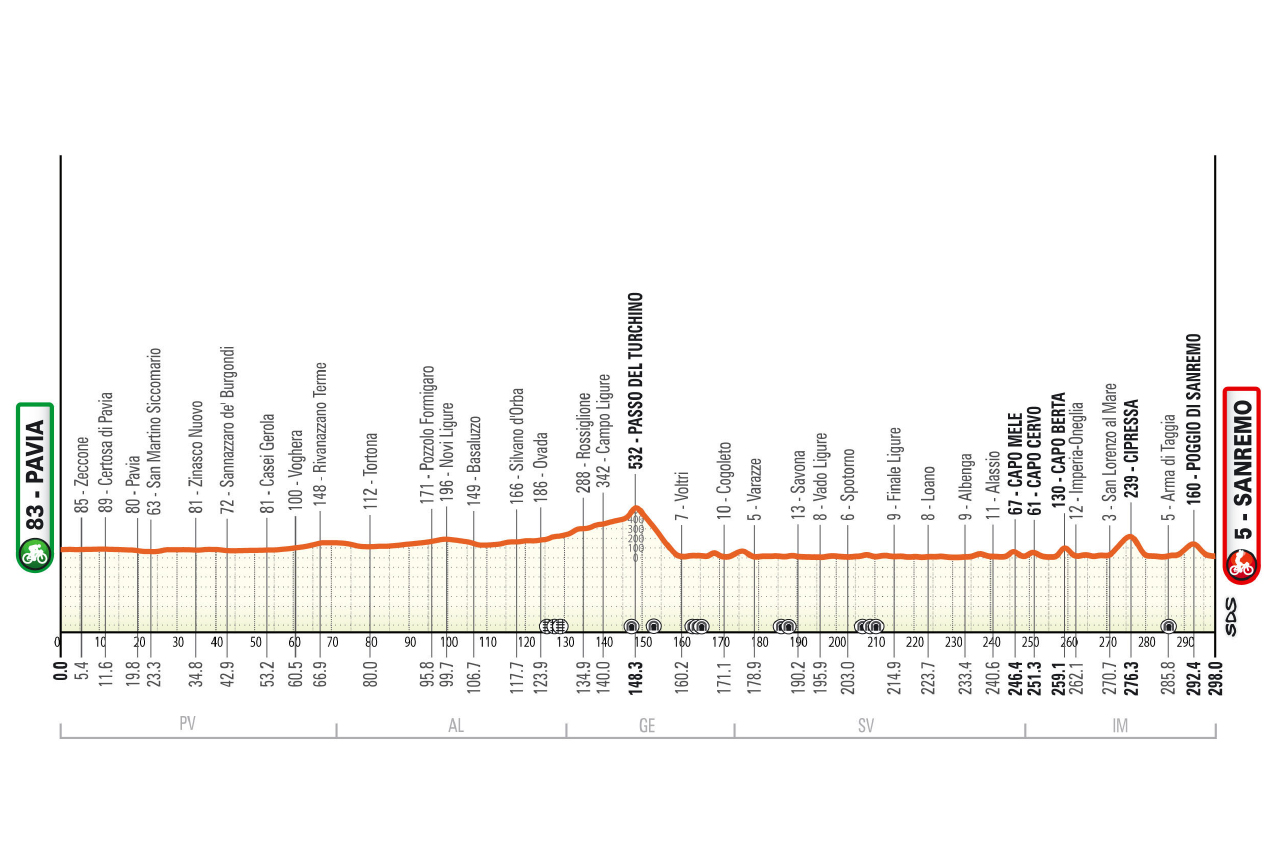
map
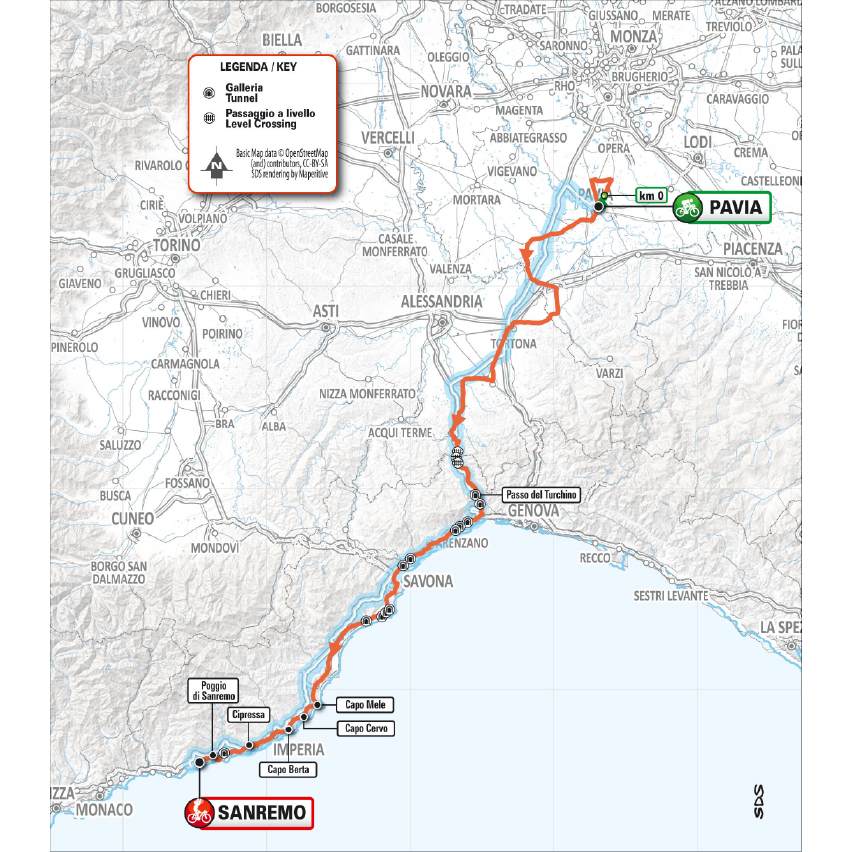
technical info
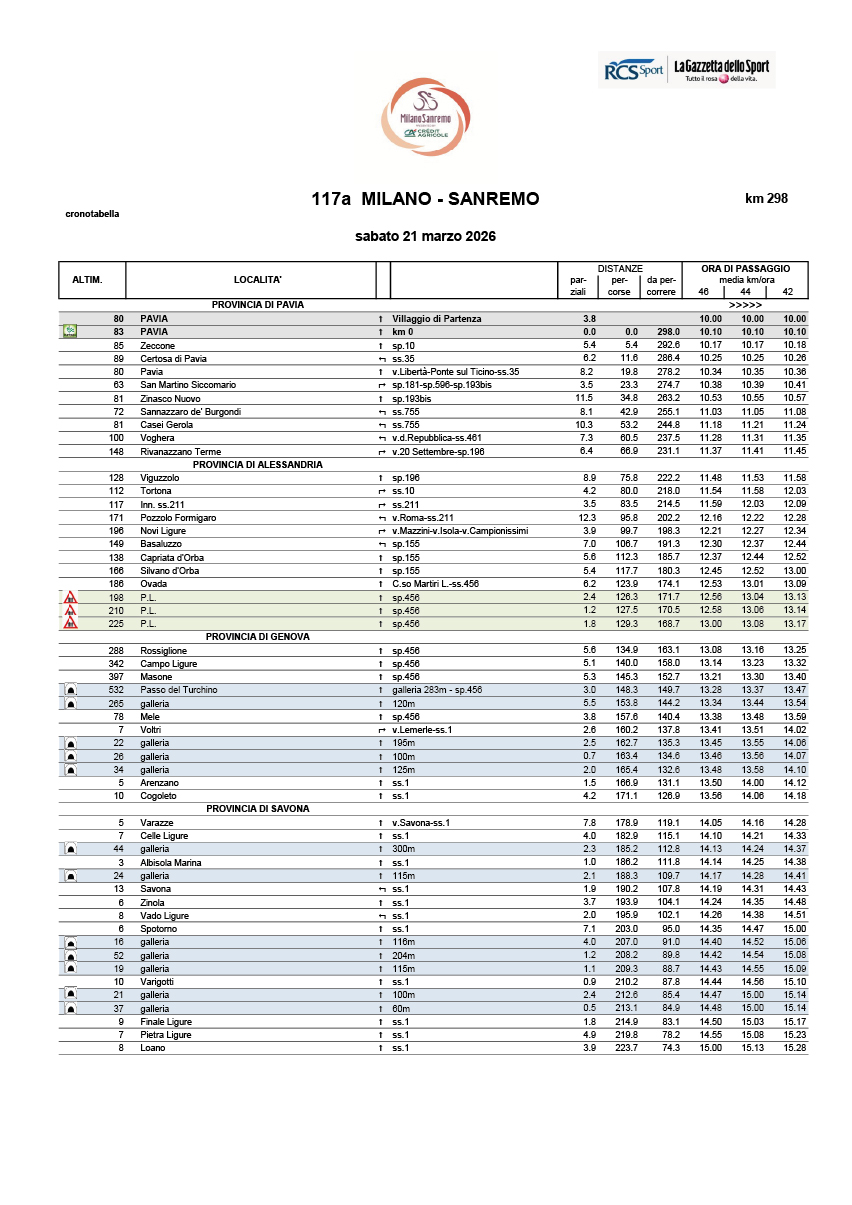
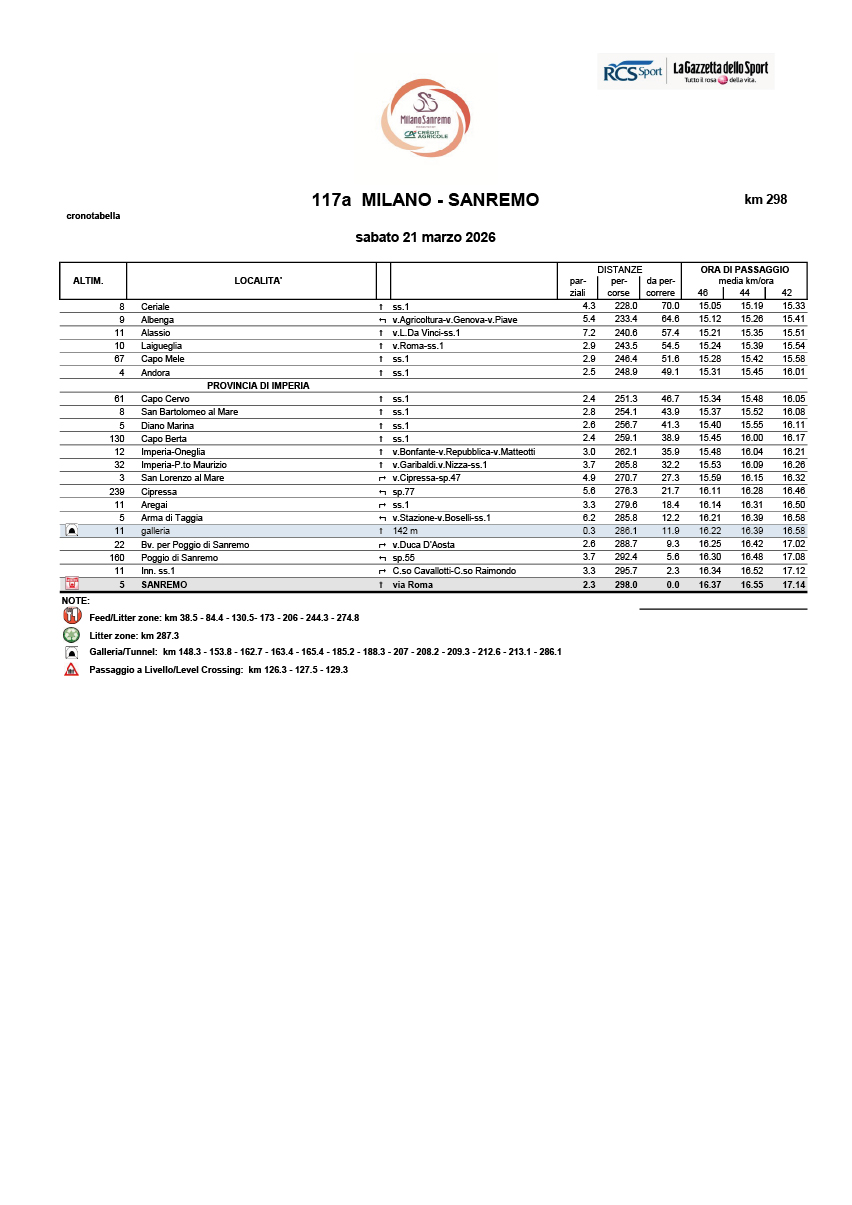
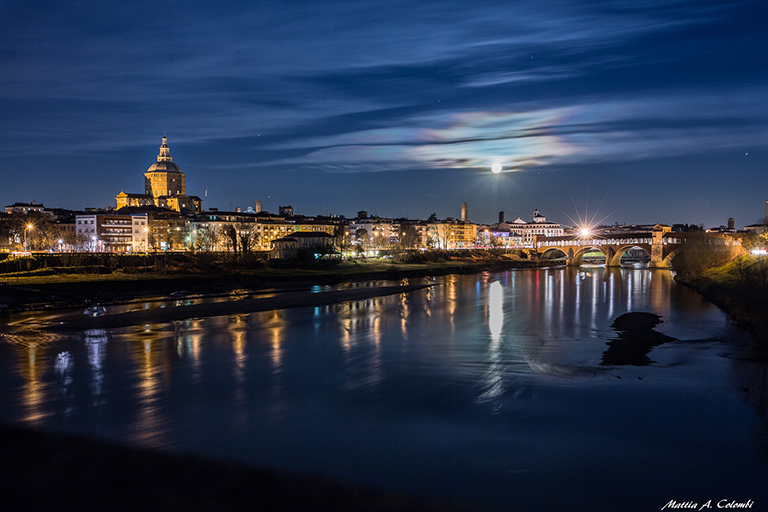
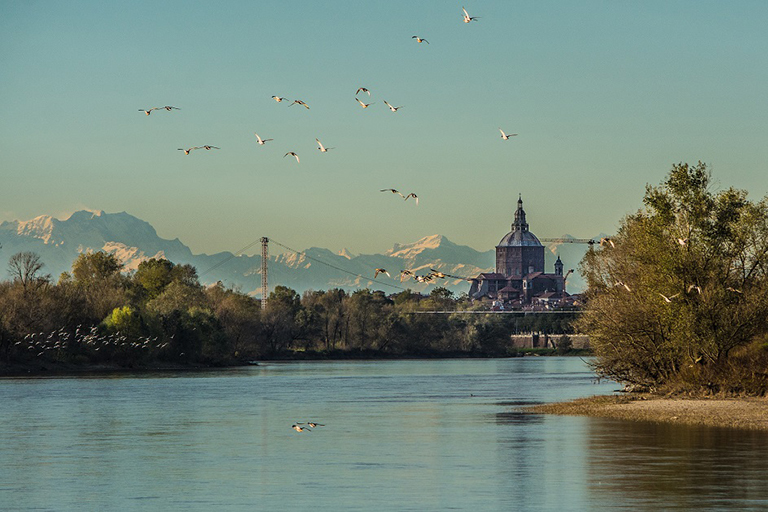
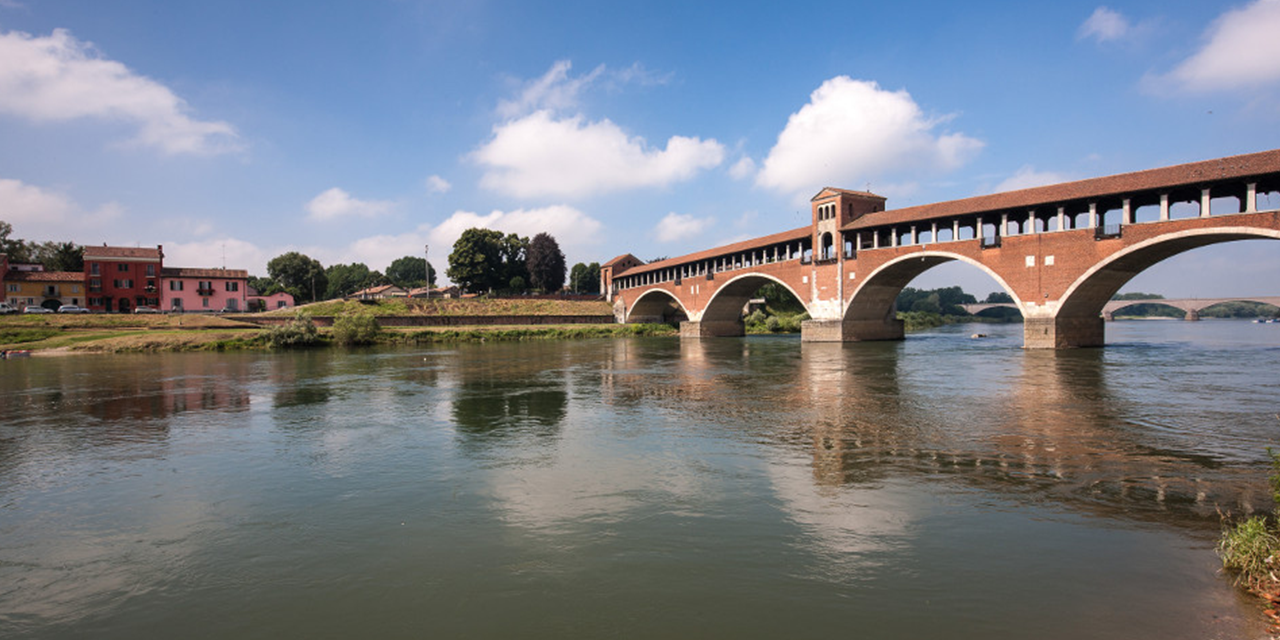
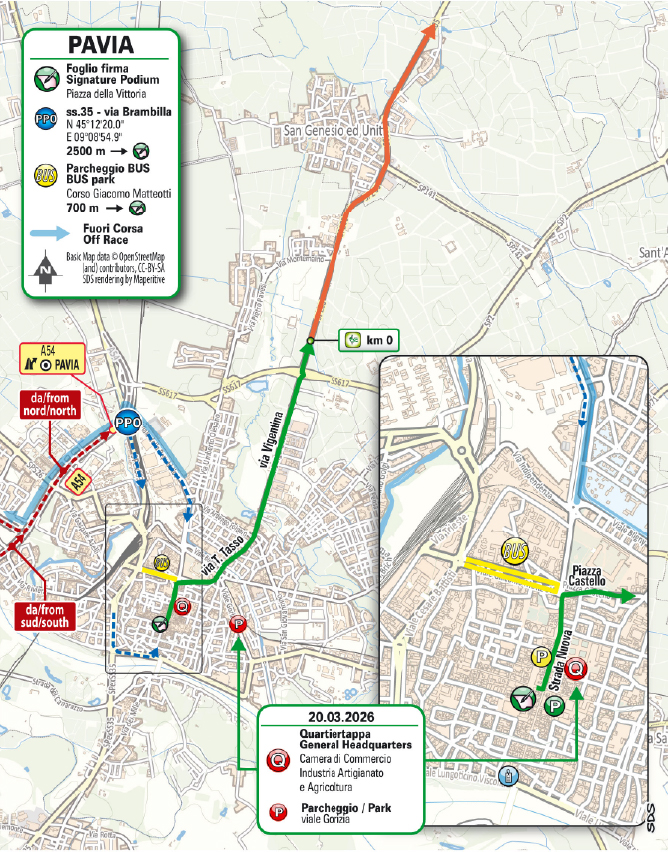
The 2026 Milano–Sanremo sets off from Pavia, heading north towards Milan, the race’s historic starting point, before reaching the Certosa, where it rejoins the traditional course. After a second passage through Pavia, the peloton ventures onto new roads, crossing Sannazzaro de’ Burgondi and Casei Gerola, before reconnecting with the 2025 route in Voghera. It was there last year that an additional detour through the Pavese area was introduced, passing Rivanazzano and Salice Terme, before rejoining the classic route in Tortona.
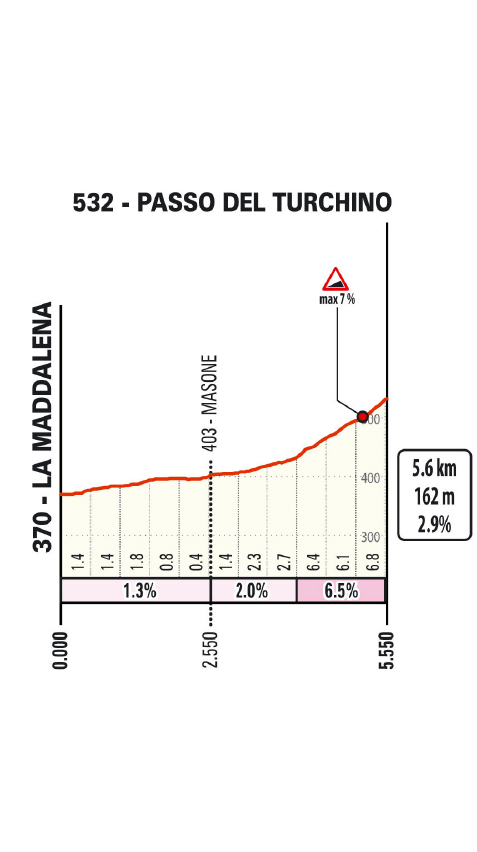
From that point to the finish, the race follows the road that for more than 110 years has linked Milan to the Ligurian Riviera, passing through Ovada and tackling the Passo del Turchino before descending towards Genova-Voltri.
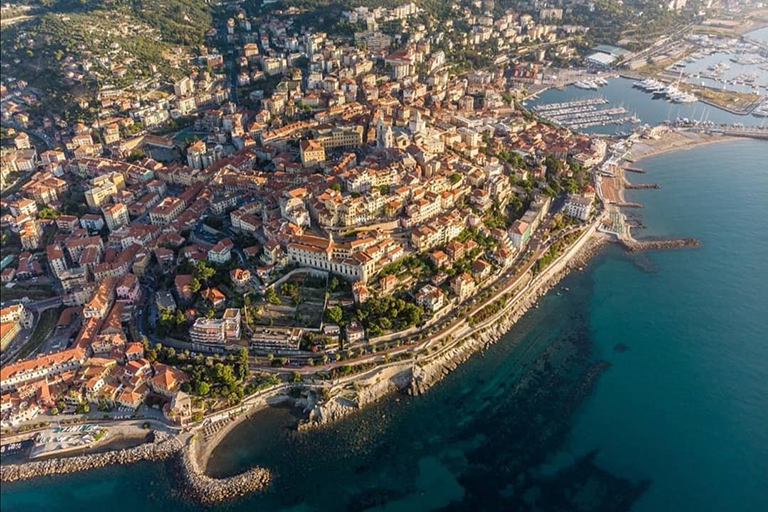
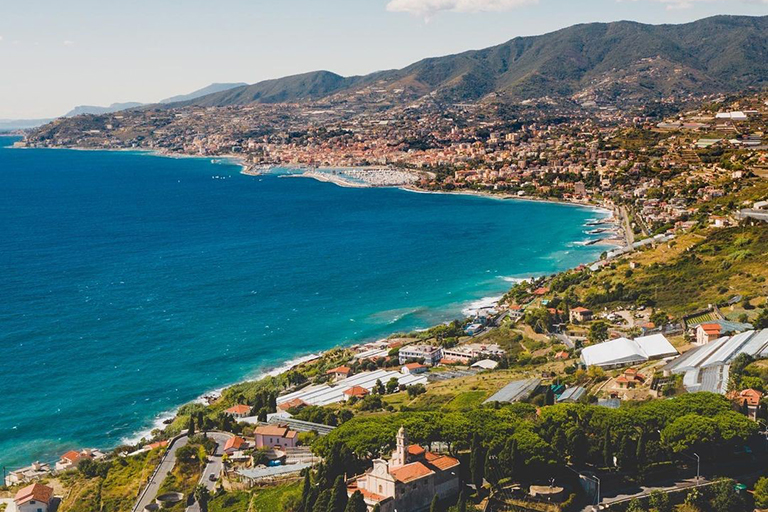
The race then heads west along the coastline on the SS1 Aurelia, skirting the sea through Varazze, Savona and Albenga (the climb of Le Manie, tackled between 2008 and 2013, is not included), before reaching Imperia.
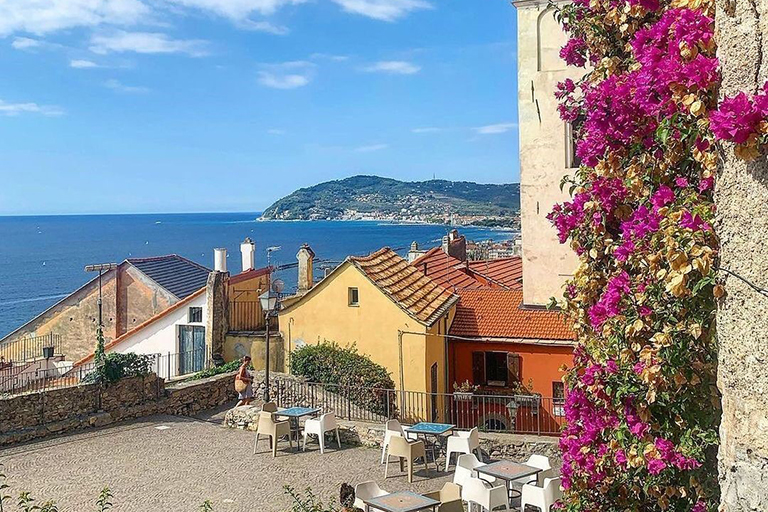
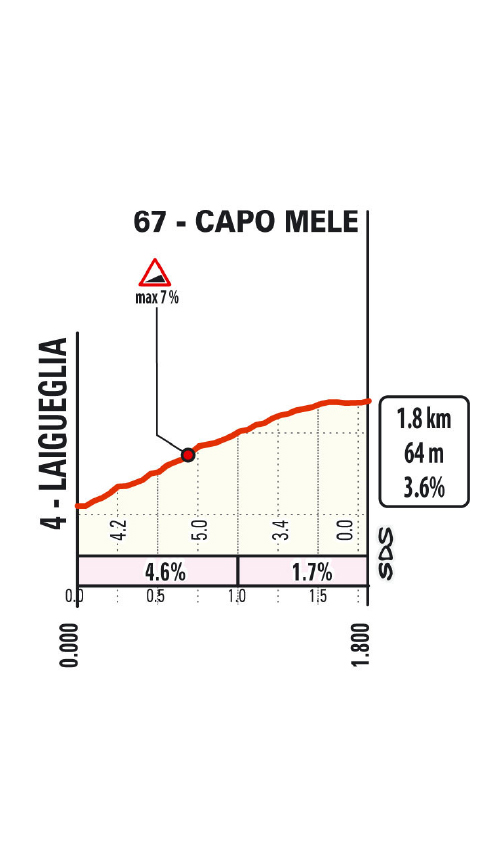
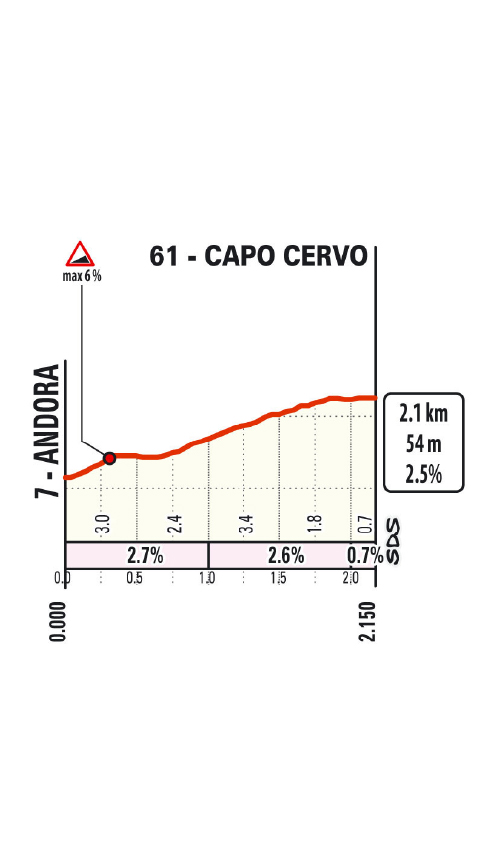
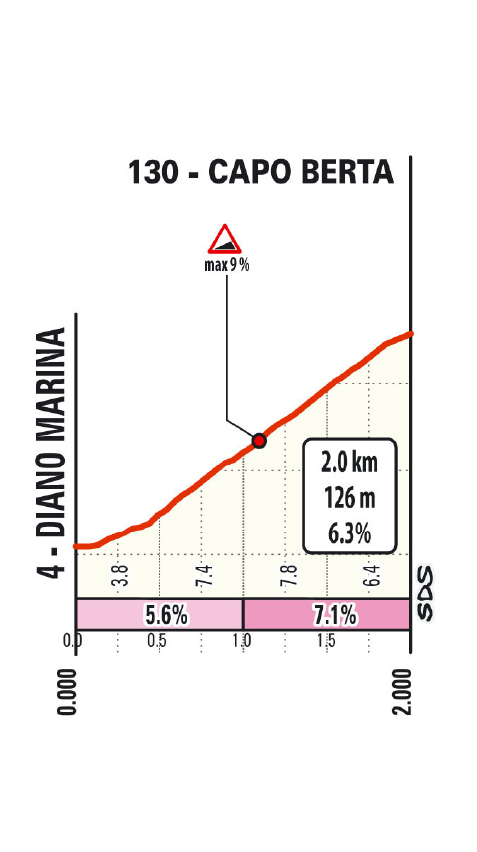
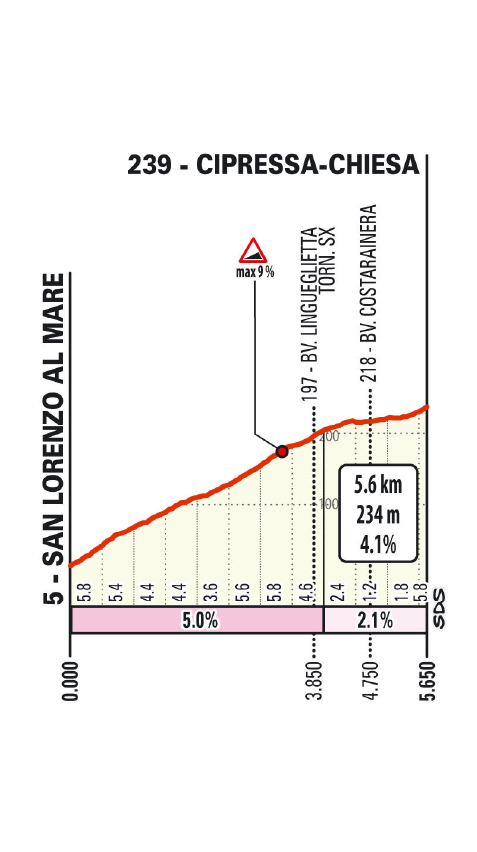
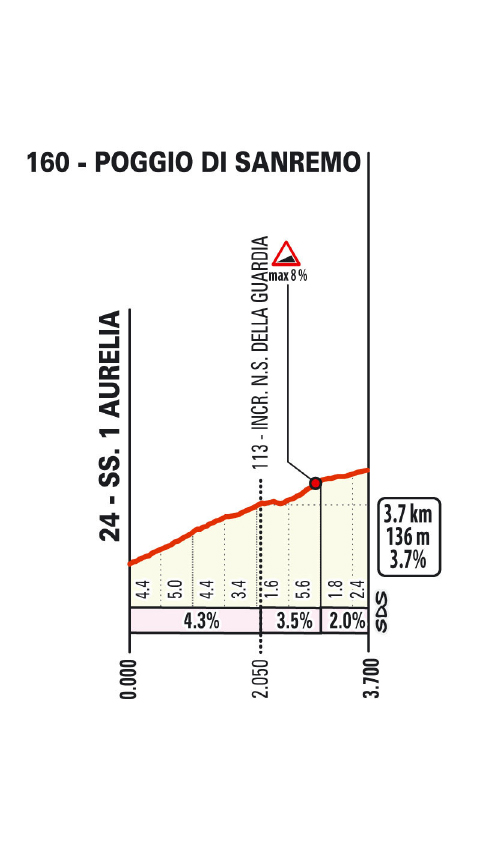
At San Lorenzo al Mare, after the traditional sequence of the “Capi” — Capo Mele, Capo Cervo and Capo Berta — the riders face the two decisive climbs added in the second half of the 20th century: the Cipressa (introduced in 1982) and the Poggio di Sanremo (1961).
The Cipressa measures 5.6 km at an average gradient of 4.1%, cresting before a highly technical descent that leads back onto the SS1 Aurelia.
Final kilometers
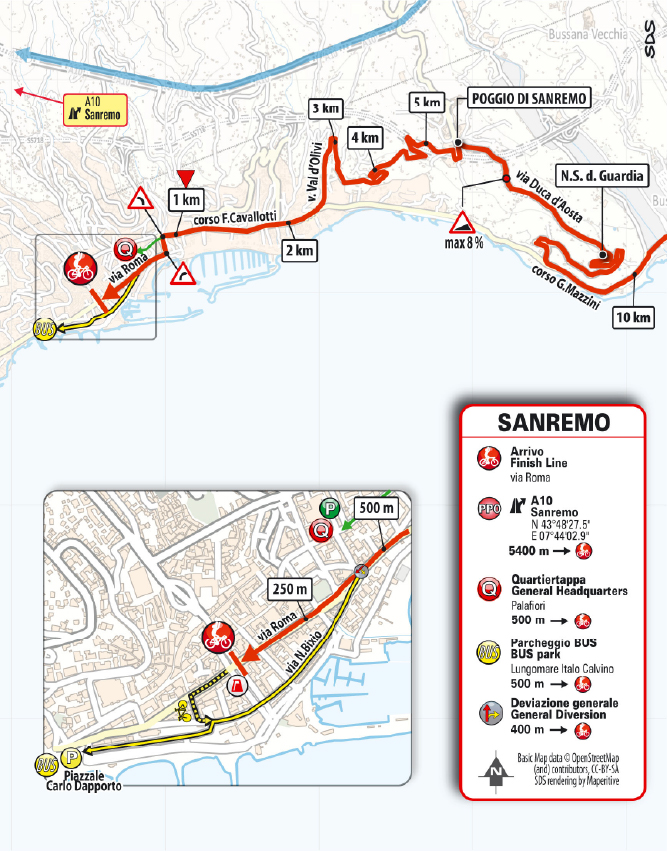
With 9 km to go, the peloton hits the foot of the Poggio di Sanremo: 3.7 km at just under 4% on average, with ramps peaking at 8% near the summit. The road narrows slightly, and the first two kilometres feature four hairpin bends, making positioning crucial.
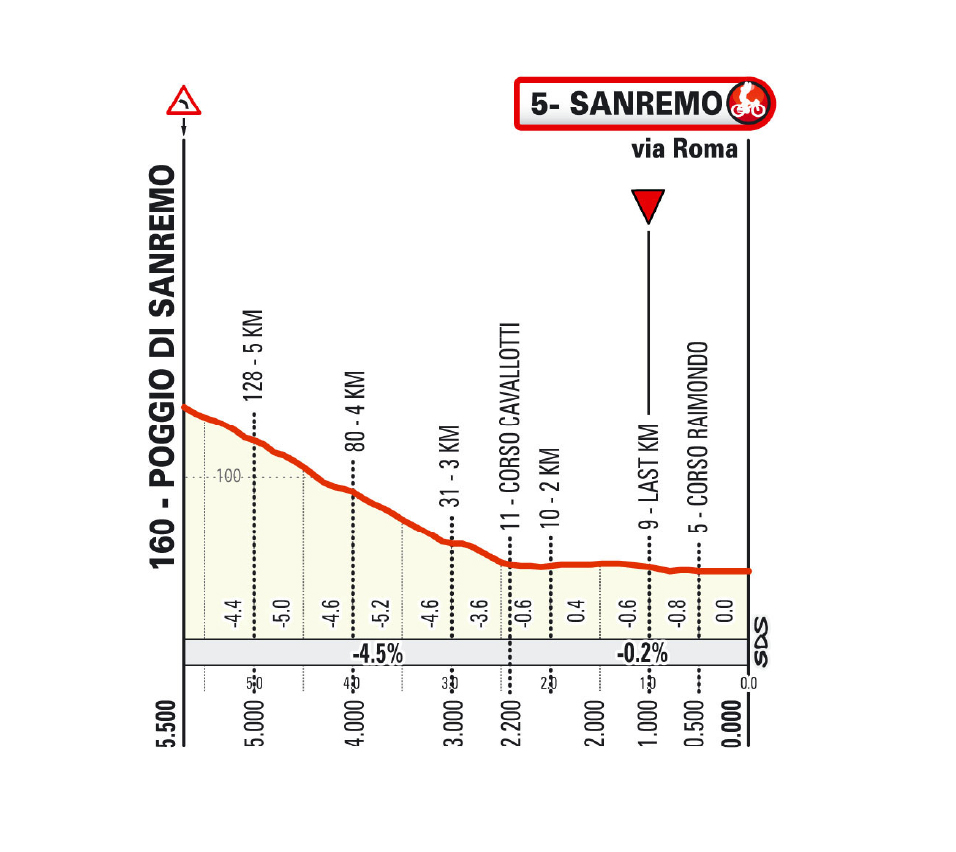
The descent is fast and extremely demanding: narrow in places, with a relentless sequence of hairpins, sweeping bends and technical changes of direction before rejoining the Aurelia. The final section of the descent runs through the outskirts of Sanremo.
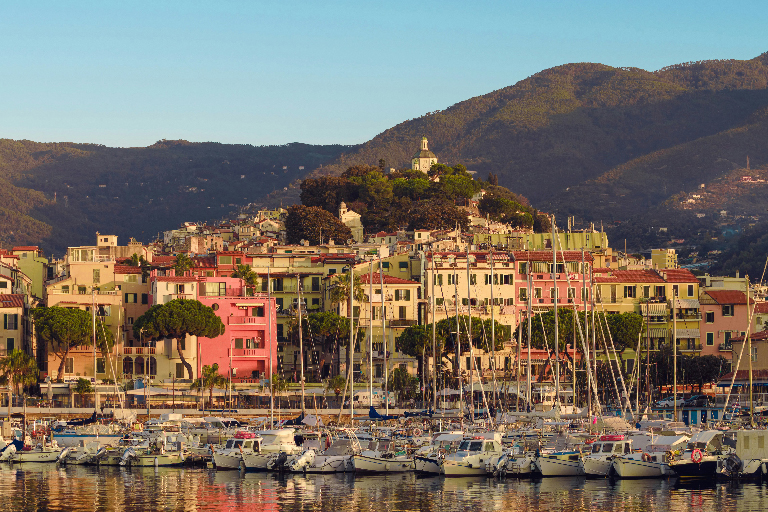
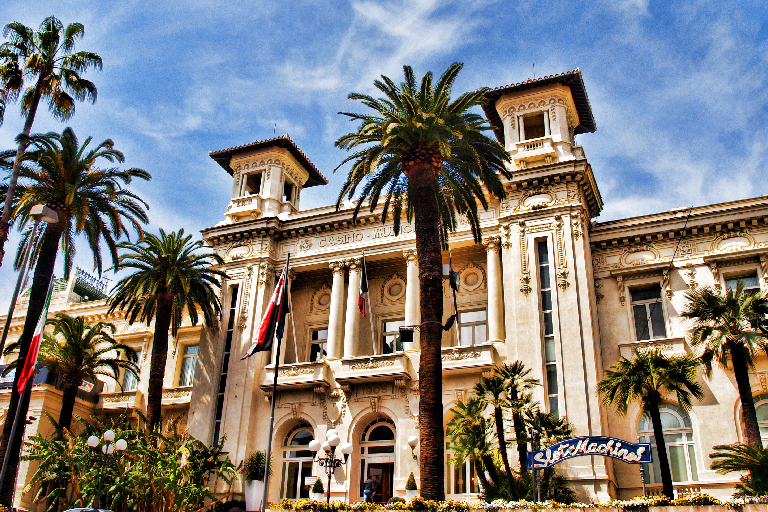
The last 2 km are contested on long urban straights. Notably, with 850 metres remaining there is a left-hand bend at a roundabout, followed by the final corner at 750 metres to go, which opens onto the finishing straight on Via Roma, all on smooth tarmac.
start / finish
climb detail
final kilometres
itinerary timetable