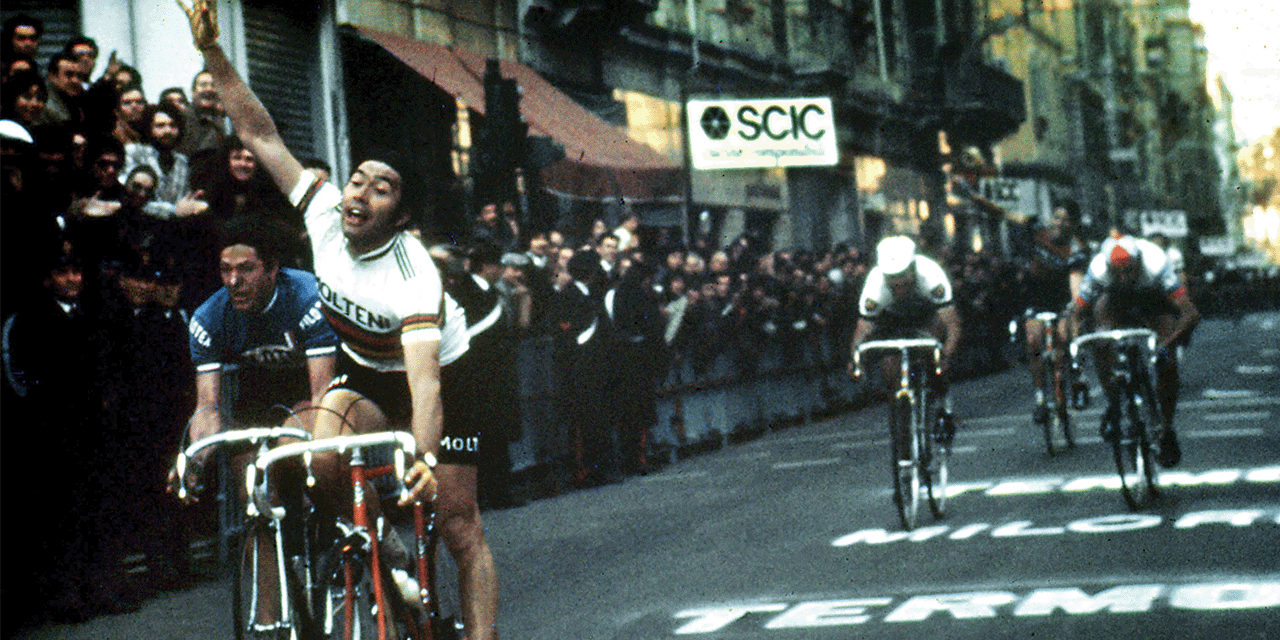
Coppi and Bartali, Merckx and De Vlaeminck.
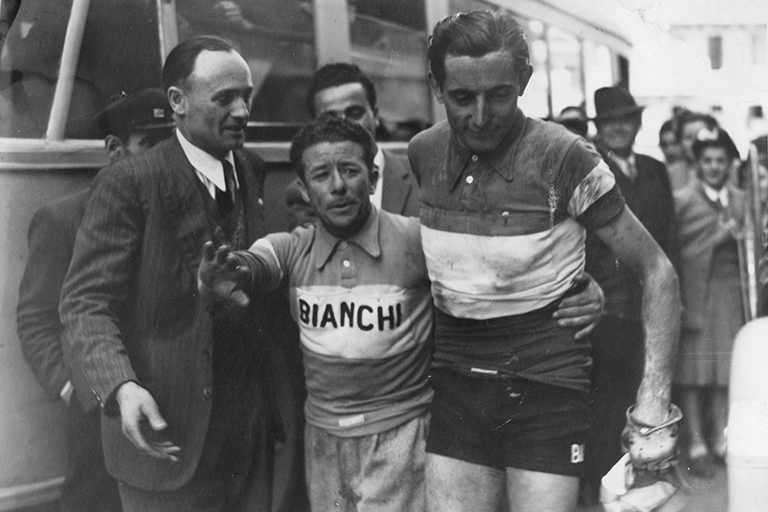
“First Fausto Coppi… and while we wait for the others, we’ll play some dance music!” — that’s how Milano–Sanremo returned in 1946 after the war, with the unforgettable words of commentator Nicolò Carosio.
Coppi, the Campionissimo, put nearly fifteen minutes into second place and would go on to win the race three times, one fewer than Gino Bartali, who claimed it twice before the war and twice after. Following Loretto Petrucci’s second victory in 1953, Italian riders went into a long drought, only broken in 1970 by Michele Dancelli.
The organizers tried to shake things up, reshaping the course: the Passo del Turchino was too far from the finish to make a difference, so the Poggio was introduced in 1960 and later the Cipressa in 1982. These were the decades of Belgian dominance, with 16 wins between 1954 and 1981: Eddy Merckx, the Cannibal, set the record with seven victories, while Roger De Vlaeminck took three.
hall of fame
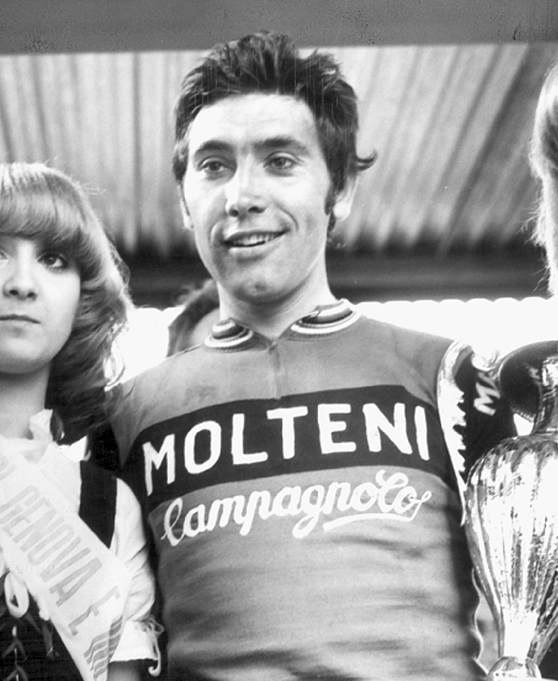
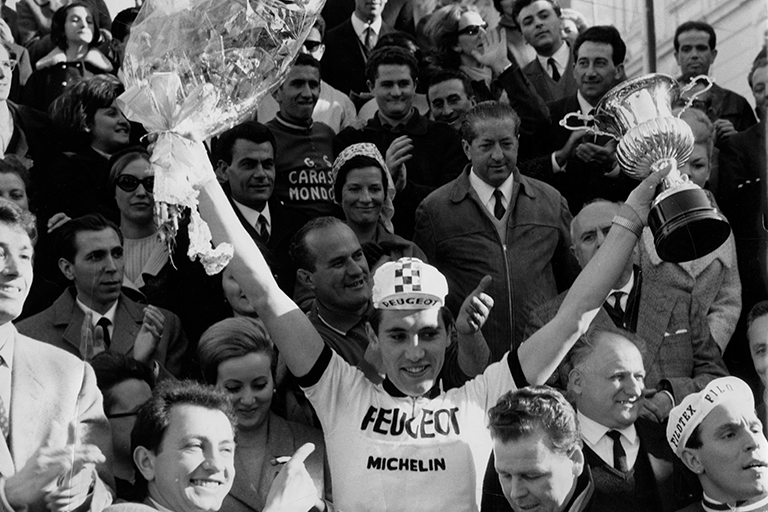
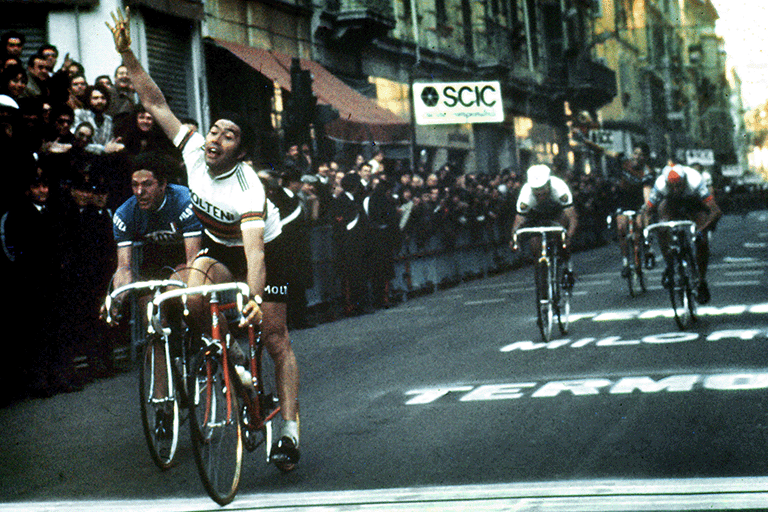
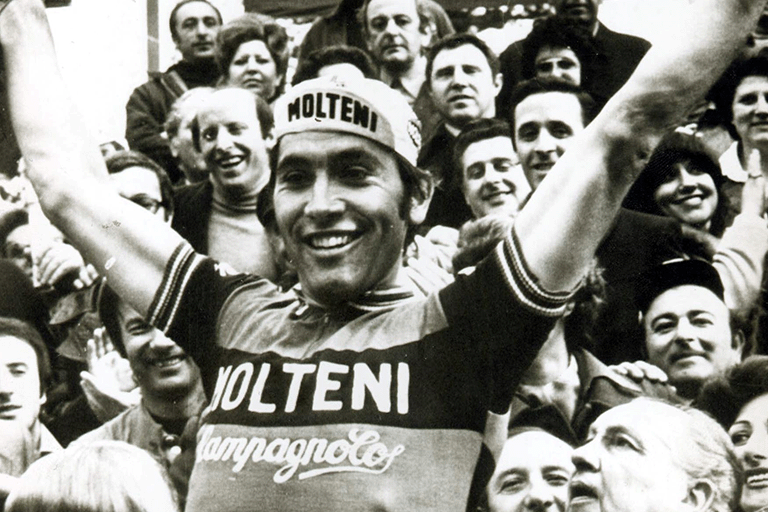
“Milano Sanremo made me realise that cycling could become my life”. In 1966, Eddy Merckx was 21, fresh out of military service, and lining up as a promising young rider. He won it in a sprint and never looked back ever since: the myth of the Cannibal was born, along with the legend of the greatest rider in history. The Poggio and Via Roma became one of his playgrounds. He won the Classicissima seven times in ten appearances, a record destined to endure. Alongside 1966, he triumphed in 1967, beating Gianni Motta, Franco Bitossi and Felice Gimondi in a sprint, and then in 1969, 1971 and 1972 with solo victories. In 1975 he won from a reduced sprint ahead of Francesco Moser. His final triumph came in 1976. Newspapers were already writing him off, but Merckx once again demolished the competition on the Poggio. It would, however, be his last Monument victory. The perfect, romantic closing of a circle. The circle of a legend.